“If Bolsonaro wins, they kill us; if Lula wins, they let us die.”
:On the 2026 Elections in Brazil


In Brazil, the third term of Luiz Inácio Lula da Silva of the Workers’ Party is drawing to a close. Lula could win a fourth term—making him the most-elected politician in the country’s history—if he defeats the son of former President Jair Bolsonaro. However, Flávio Bolsonaro—son of the man dubbed the “Trump of the Tropics,” who attempted a coup d’état in 2023 strikingly similar to the one Donald Trump attempted in 2021—is dangerously close to taking the lead in the polls.
It is time to assess the threats that a new Bolsonaro administration would pose, as well as the risks that will remain or emerge under a continuing center-left government. We spoke with fellow Brazilian anarchists active on a variety of fronts about the challenges that both scenarios could pose to human beings, the environment, and social movements resisting capitalism and colonialism.
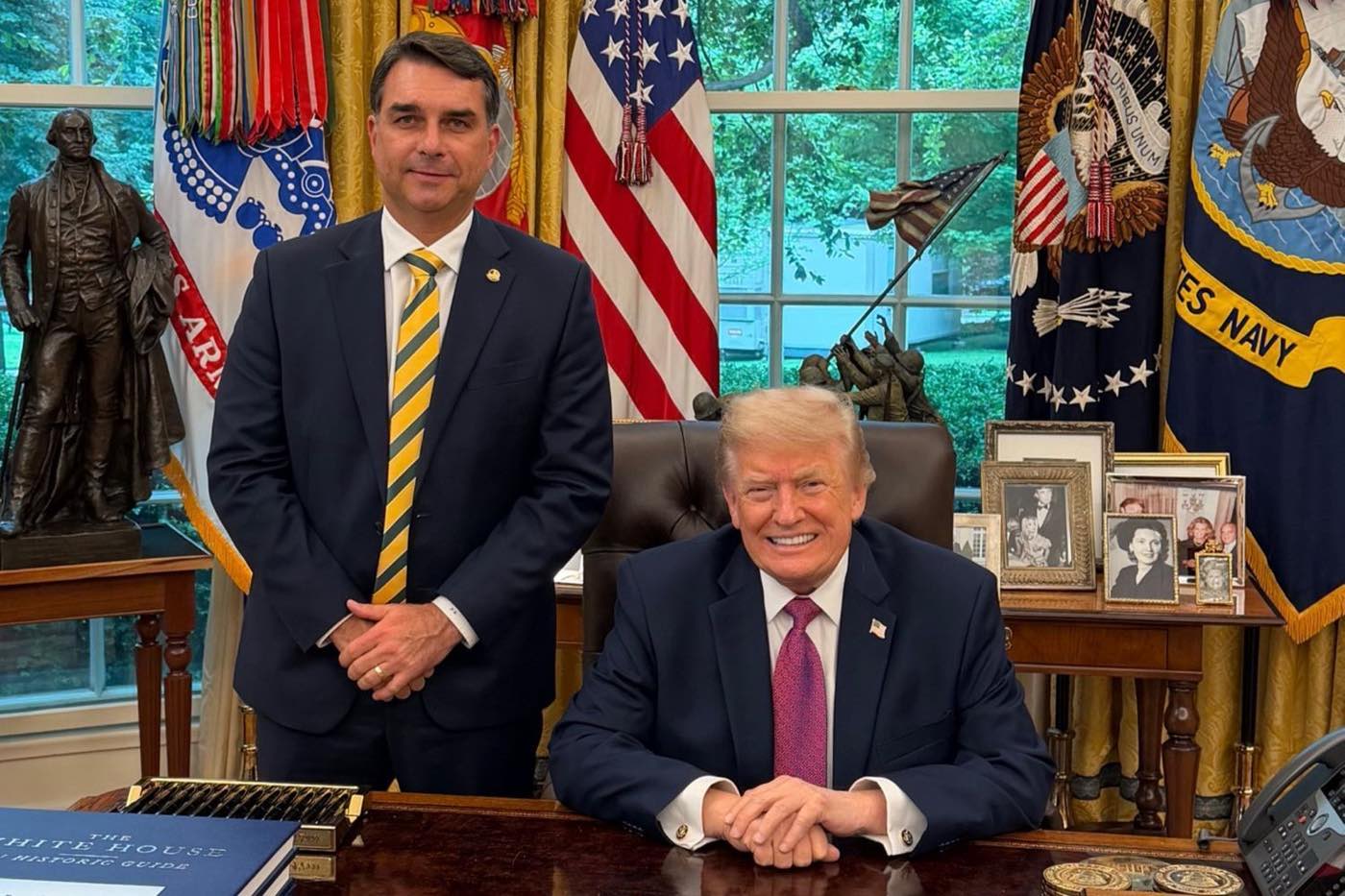
Flavio Bolsonaro in a photo-op with Trump in May 2026 during a meeting at which he lobbied for the US to designate Brazilian drug cartels as “terrorist groups.”
What the 2026 Elections Mean for Brazil and the Americas
The 2026 election will determine to what extent the gains achieved through hard-fought social struggles are stripped away. Just as Trump returned to power via the 2024 election, there is a risk that Flávio Bolsonaro could resume his father’s attacks on the working class, marginalized groups, women, Indigenous peoples, and the environment. The Workers’ Party and the left in general have not managed to produce new figures to succeed their charismatic leader; without Lula, they appear doomed to electoral defeat.
There is a risk that the left will fail to field an effective new candidate for 2030, when Lula will no longer be eligible for reelection. It is also likely that, if elected, Lula could fall victim to the so-called “incumbency crisis“—a pattern that has emerged in elections worldwide this decade. Leaders on both the left and the right see their public standing erode after taking office, as they fail to address the inexorable impact of capitalism on the lives of ordinary people. Symbolism and abstract ideology carry significant weight in the increasingly polarized political landscapes of bourgeois electoral politics, and around the world, the ruling class is relying less and less on the carrot and more and more on the stick.
Therefore, it is likely that the far right will soon return to power. This is a reality we must face. It could happen in 2030, but it could occur as early as 2026.
This is taking place in a context in which Trump’s United States is attempting to reorganize the world order through force, showing everyone what anarchists have always known: that representative democracy, international law, and institutions like the United Nations exist at the pleasure of the ruling class and will not protect us. In the course of its first fourteen months in power, the second Trump administration toppled two heads of state—killing the Iranian leader and abducting the Venezuelan president. In both cases, there was open talk of seizing the oil from these territories; in Venezuela, the administration successfully stole billions of barrels, which are now under Washington’s control.
As head of state, Flávio Bolsonaro would voluntarily hand over Brazilian workers, forests, and land to US imperial interests. We are already in a dire situation under the neoliberal arrangement that Lula manages; with a fascist who is beholden to the US in power, the struggle for survival would become even harder. Furthermore, the oil, minerals, rivers, and forests in the territory known as Brazil would serve to fuel the technological, military, and nuclear arms race that endangers life across the entire planet.
The United States is openly attempting to interfere in Brazilian elections to favor Bolsonaro by sending “observers” to question election results and threatening to impose further tariffs on Brazil. At the same time, the US-based company Meta—which controls much of the content circulating on social media—is blocking Lula’s campaign content just weeks before the election without explanation. The same elites with the same reactionary agenda control both military power and the companies that dominate technology and digital communication.
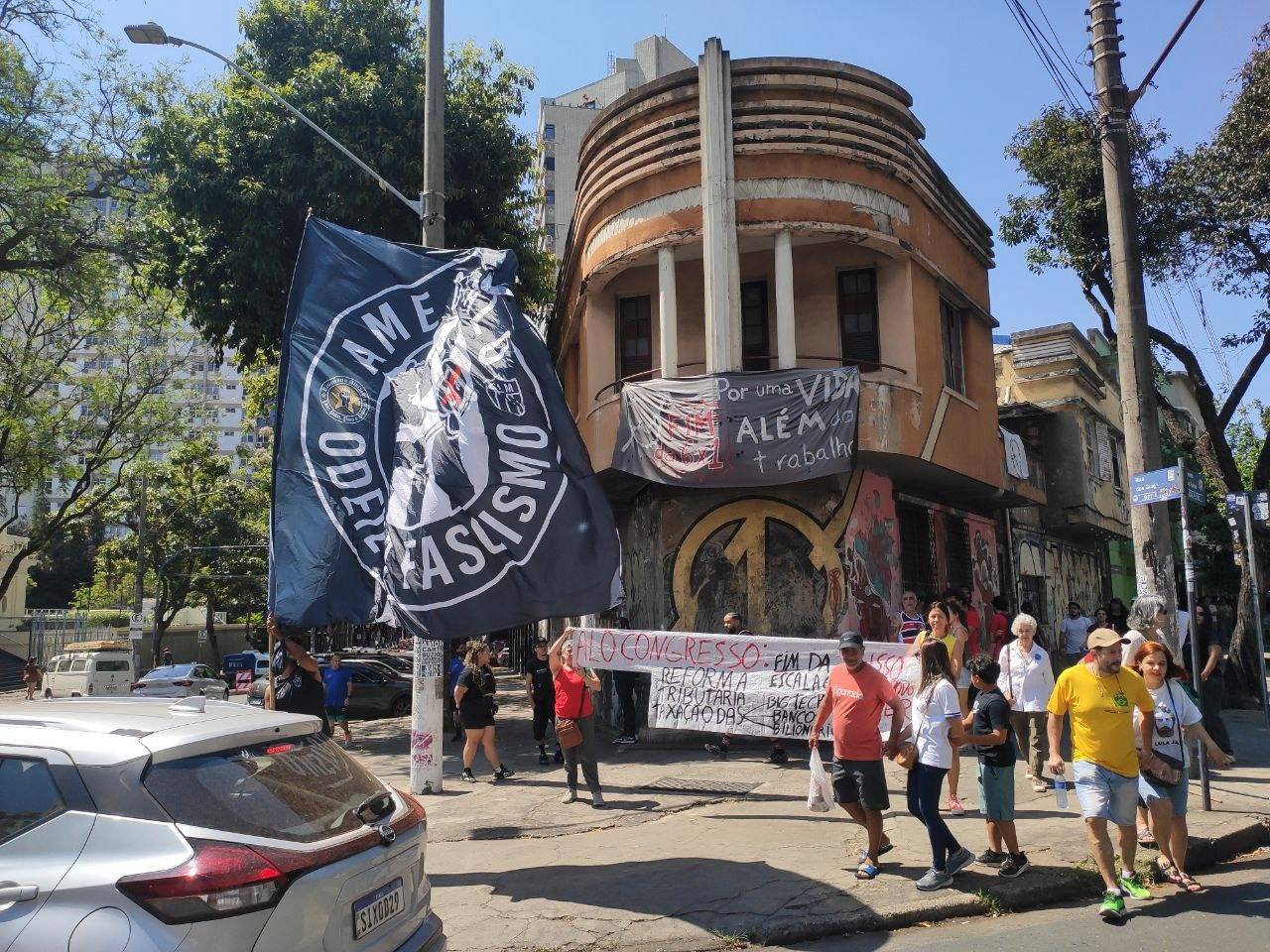
Anarchist and anti-fascist Atlético fans marching against the six-day work week.
The Consequences of Lula’s Third Term
The administration of Jair Bolsonaro left a landscape of scorched earth, which still haunts those who endured it. Bolsonaro ruled the country through a global pandemic without any consideration for ordinary people, guided by conspiracy theories and spreading misinformation. He managed to shift the entire political spectrum a few steps to the right. Against that backdrop, Lula emerged as the only way out. Although his platform has become increasingly moderate and conservative, many left voters see his administration as an oasis in the desert. They hope that, over one or two terms, Lula will resolve the nation’s social, economic, political, and environmental problems, while once again forging alliances with political oligarchies and transnational capital.
After a narrow victory in 2022, Lula took office and ascended the ramp of the Planalto Palace alongside representatives of marginalized groups and social minorities: a Black child, an Indigenous leader, a disabled influencer, a teacher, a metalworker, and a recyclable materials collector. Yet within months, he had allied himself with the Centrão (a bloc of pragmatic, centrist parties), the right wing, and the usual elites. Although his administration started out with high popularity thanks to income tax cuts for the poor and falling unemployment, agrarian reform and land demarcation remain stalled, while the administration has imposed spending caps on social programs. Lula’s third term is serving to mitigate the traumas of capitalism that were pushed to the extreme during the Bolsonaro administration, yet it has done so without challenging the gains of elites who profit from interest and rent-seeking. Little is being done to regulate the “platformization”—or “Uberization”—of precarious labor, while digital betting platforms hook and drain the earnings of minimum-wage workers.
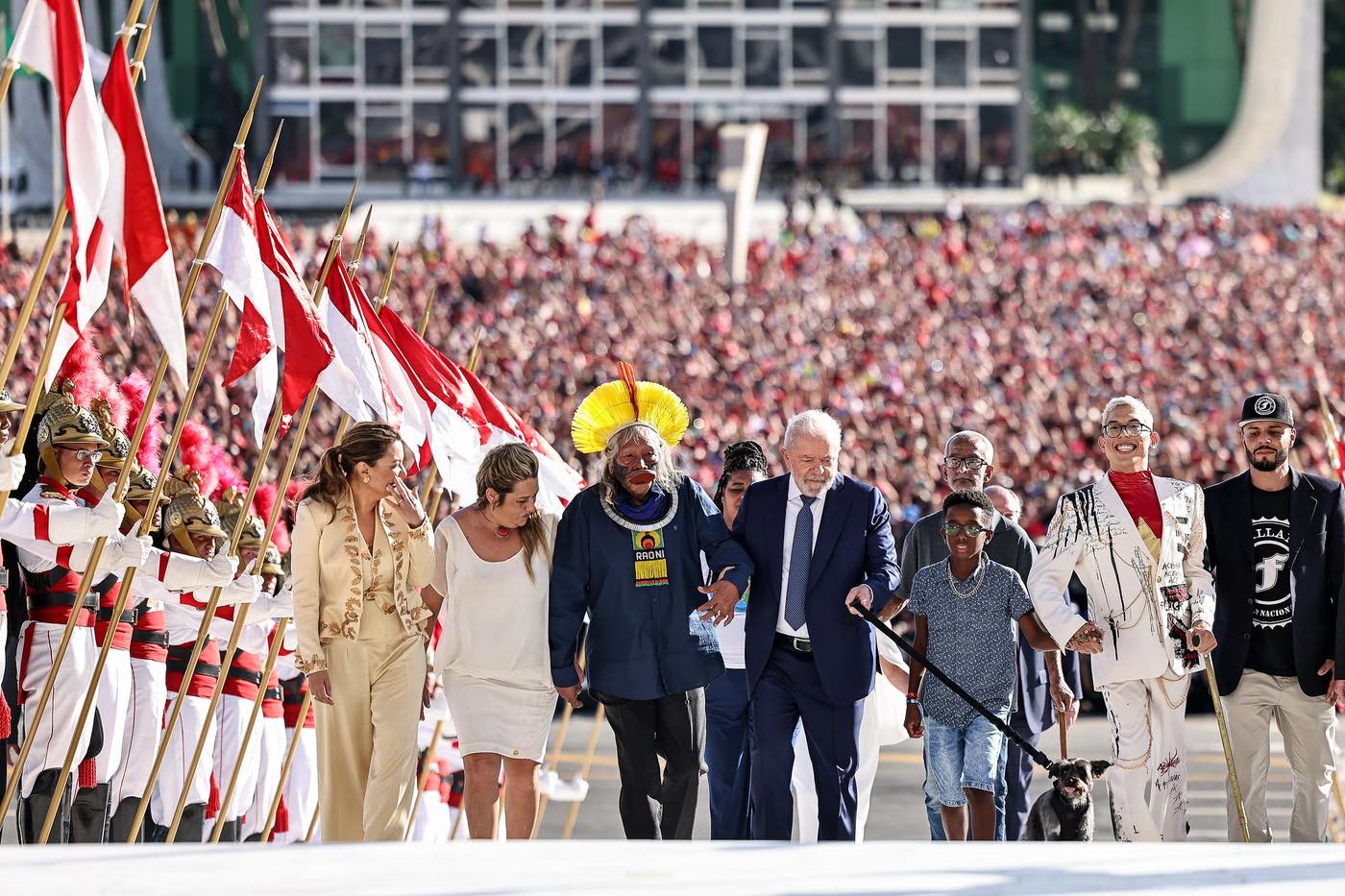
2022: Lula’s inauguration on Planalto Palace. A spectacle to distract.
Even more restrained than the first four Partido dos Trabalhadores (PT) administrations under Lula and his successor Dilma Rousseff, the Lula-Alckmin term has been characterized by heightened economic conservatism and the suppression of social struggles. While meeting with government and corporate representatives at the COP30 in Belém, in the middle of the Brazilian Amazon, to discuss environmental “solutions” with the very ones destroying the environment, Lula moved forward with a decree privatizing the use of the Amazonian Madeira, Tocantins, and Tapajós rivers as waterways for transporting grain, ore, and timber. This was in addition to implementing various other projects with significant social and environmental impacts under the third iteration of the PAC (Growth Acceleration). Despite gesturing at the so-called ecological transition, the PT government has repeated the same extractivist, raw-material-exporting formula that has given rise to environmental disasters.
The president of Petrobras (the majority state-owned Brazilian multinational energy corporation) has echoed Donald Trump’s “drill, baby drill” slogan, emphasizing that drilling for oil at the mouth of the Amazon River remains a government priority to generate the dollars needed to balance the books—despite public opposition and warnings from scientists regarding the risks of exploration in an area with such sensitive biodiversity. In the name of expanding capitalist production infrastructure, entire biomes and populations are being sold for scrap. In the Yanomami Indigenous Territory in Roraima—a symbol of the humanitarian crisis that struck Indigenous peoples during the Bolsonaro administration—the death toll remains at least as high as it was under the previous government, if not higher. Lula promised to bring the crisis under control during his election campaign, but this has not occurred.
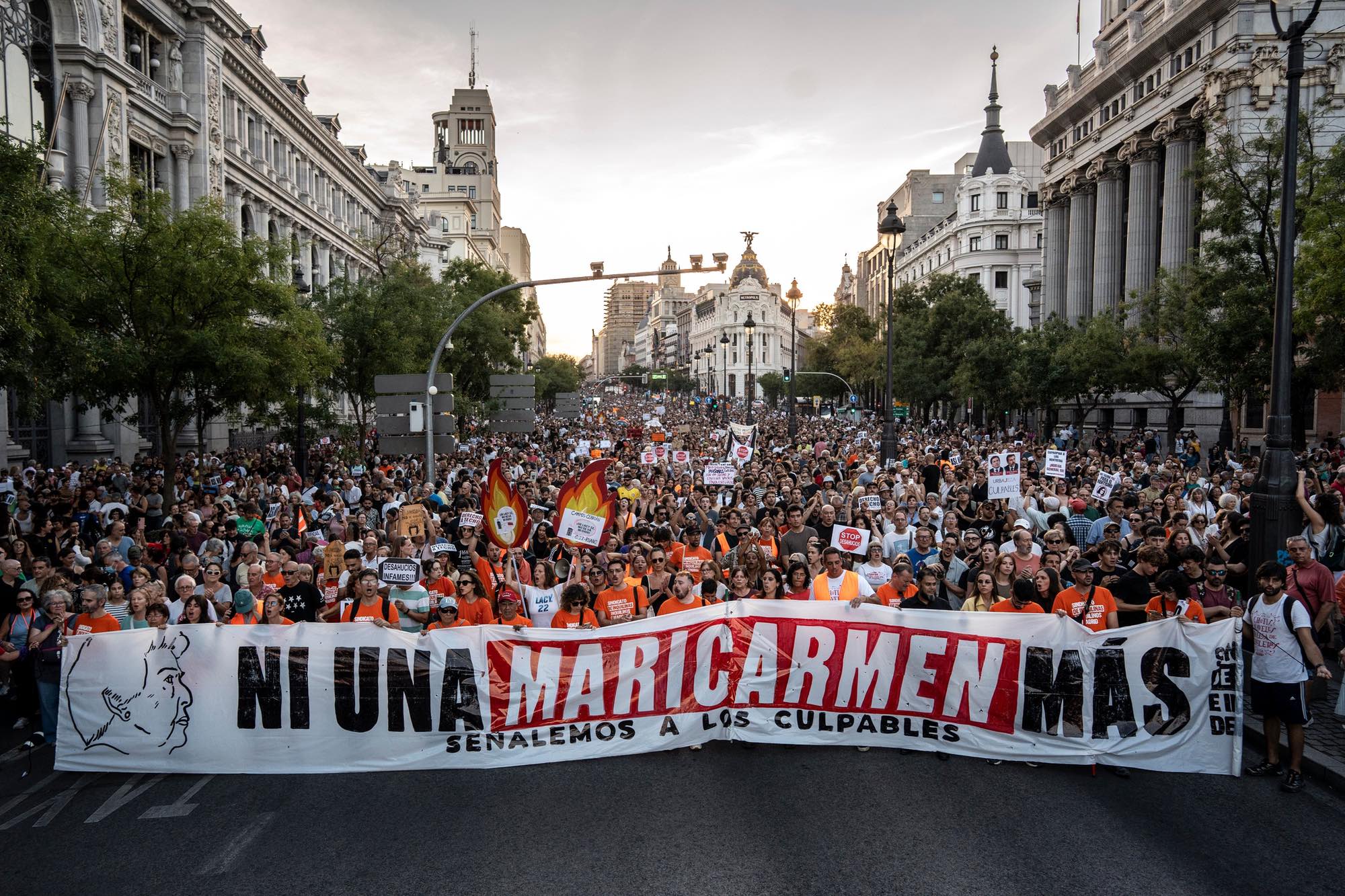
The situation in cities has not been much better. While sticking to the formula of exporting ore and agricultural products to fund social spending, the Lula-Alckmin administration has only paid lip service to popular demands to end the “6x1” work schedule (six days of work followed by one day off). They only incorporated the topic into their campaign platform on the eve of the elections. If Congress ever does approve an end to the six-day workweek, it will be the consequence of popular mobilization, not action by the self-proclaimed “workers’ government”—an administration that intentionally undermined national marches calling for an end to the 6x1 schedule by calling for its base to take to the streets against amnesty for Jair Bolsonaro and other participants in the 2023 coup attempt. This is the same pattern we saw when the Workers Party refused to support pandemic-era protests against the Bolsonaro government.
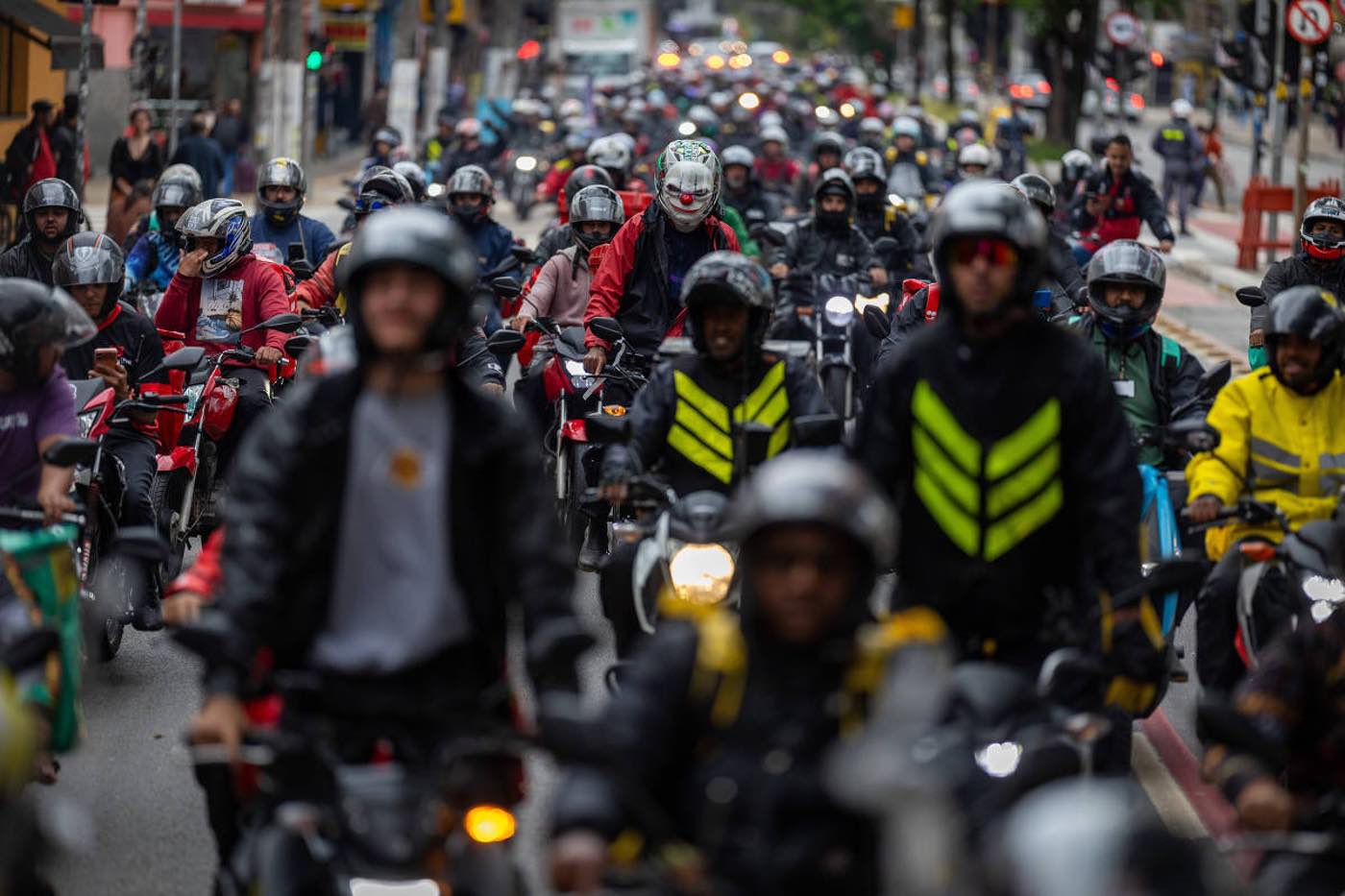
September 2026: App-based delivery workers protest for better working conditions and a minimum delivery fee. Grassroots organizing against the “uberization” of work.
In 2024, Lula acted to prevent any official government statement regarding the 60th anniversary of the 1964 business-military coup, yielding to pressure from Defense Minister José Múcio—an ally of Jair Bolsonaro and the military high command that had orchestrated the attempted coup of January 8, 2023.
The government began adopting a right-wing approach to public security, even as femicide rates hit historic highs in the country and police massacres grew increasingly brutal—such as the 2025 mass killings in Penha and Alemão (Rio de Janeiro), the deadliest police operation in history, which claimed over 120 lives. To sustain a declining republic and implement the “PAC 3” developmentalist infrastructure projects designed to appease foreign capital, this administration has ramped up policing, further armed security forces, and expanded the prison system and mass incarceration. To this end, it launched a new version of the National Public Security with Citizenship Program (PRONASCI 2).
Speaking of the “security” industry, Lula’s government spent 50 million dollars on Israeli weaponry over the past three years. While condemning Israel for the Palestinian genocide on several occasions, such as at the UN General Assembly in 2025, the Lula administration never severed ties with the Zionist government. Likewise, despite condemning the embargo that endangers the lives of millions in Cuba, Brazil continues to withhold fuel shipments to the island while having sent oil directly to fuel the Israeli war machine.
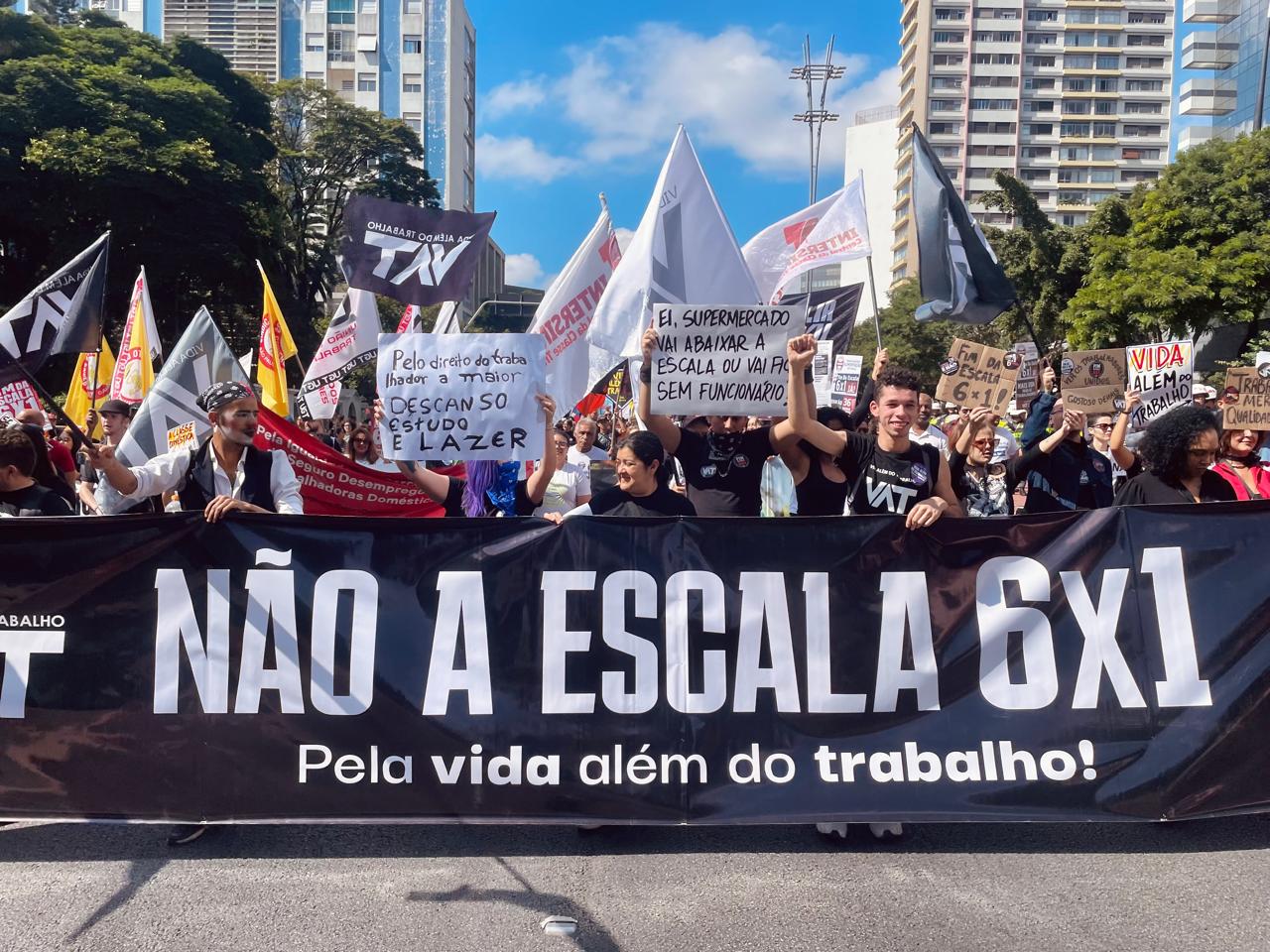
Protesters march in São Paulo for an end to the six-day workweek.
And if the Far Right Wins?
Flávio Bolsonaro is the son of former President Jair Bolsonaro, who attempted a coup in 2023 with the help of the country’s security forces and political and economic elites—in a manner similar to, yet arguably more dangerous than, Trump’s actions following his 2020 defeat. His governing agenda is openly inspired by the authoritarian public security programs of Donald Trump in the US and Nayib Bukele in El Salvador, as well as the dismantling of social protections championed by Javier Milei in Argentina.
We have already witnessed how the far right can exacerbate a large-scale tragedy like the COVID-19 pandemic. Now, as events like El Niño strike a world already grappling with global warming, the class divide deepens; politicians and the super-rich expose the sham of international law and push for a global civil war, as evidenced by US aggression against Iran and Venezuela. A Bolsonarista government operating with direct US intervention could create even more devastating catastrophes. We must prepare now for the moment when the institutional Left can no longer mitigate the consequences of capitalist collapse and ascendant fascism, nor prevent narrow electoral victories by the right. That future is no longer a distant prospect.
Thanks to their destructive ideologies and lack of genuine management skills, Trump and Bolsonaro were defeated in democratic elections. Their unpredictability makes them dangerous even to the elites who desire a measure of stability and a solid governing agenda. Yet popular and electoral support for these leaders remains steadfast, effectively splitting society right down the middle.
It is no longer just “the economy, stupid”—as the political playbooks of the 1990s and 2000s put it. What mattered to voters then—more than ideology or moral values—was the tangible impact that government actions had on the average citizen’s pocketbook. In the 21st century, other factors are coming into play. Both Joe Biden and Lula achieved strong economic indicators by the end of their terms: low unemployment, rising average incomes, and controlled inflation. Yet neither managed to win over a large enough share of the electorate to secure a commanding lead. Democrats failed to prevent Trump from winning a second term in 2024, and Jair Bolsonaro’s son is threatening Lula’s lead in the polls for the 2026 election.
The so-called polarization between dominant camps in electoral politics derives from factors far more complex than objective economic figures. For Trump supporters of the MAGA (“Make America Great Again”) movement in the United States and members of the so-called “Bolsonarista Digital Party,” the battle between left and right is an existential struggle—a fight over identity. It is often framed as a “holy war” between “good and evil,” in which everything is negotiable except devotion to their leader and “savior.” Far-right populist leaders hold such appeal for the public precisely because they present themselves as anti-establishment figures in a world in which no one believes in the system any longer and both right-wing and left-wing elements of the state have worked together to ensure that no genuinely grassroots alternative to it can emerge.
When we speak of a social base as fundamental to advancing a long-term political agenda, we must acknowledge that the Brazilian far-right—much like its counterparts across the Americas and parts of Europe—is far more mobilized for propaganda and recruitment than any left or anti-authoritarian formation. It achieved this by appropriating the tools, digital platforms, and decentralized organizational methods originally pioneered by the radical left. They continue to operate independently, championing their leaders’ rhetoric and recruiting activists.
When figures such as Bolsonaro, Trump, Vladimir Putin, or Milei take control of an entire nation, the perils of this mobilization become starkly apparent. The greater the concentration of economic, military, and political power and perceived legitimacy a state holds, the more severe the consequences for vulnerable groups when that power falls into the hands of authoritarian, egocentric leaders. With a single government order, they can dismantle the policies and structures that sustain millions of lives or declare war against internal, external, or even imaginary enemies.
The heads of companies such as Amazon, Meta, Google, Apple, and Tesla/SpaceX attended the Trump’s second inauguration in 2025 to hail the “return of the king,” standing alongside leaders intent on dragging capitalism back to an era of raw colonialism and genocidal expropriation. Some—such as the owners of Meta and Google—have abandoned the ostensibly progressive rhetoric that characterized Silicon Valley a decade ago, embracing masculinist and authoritarian values.
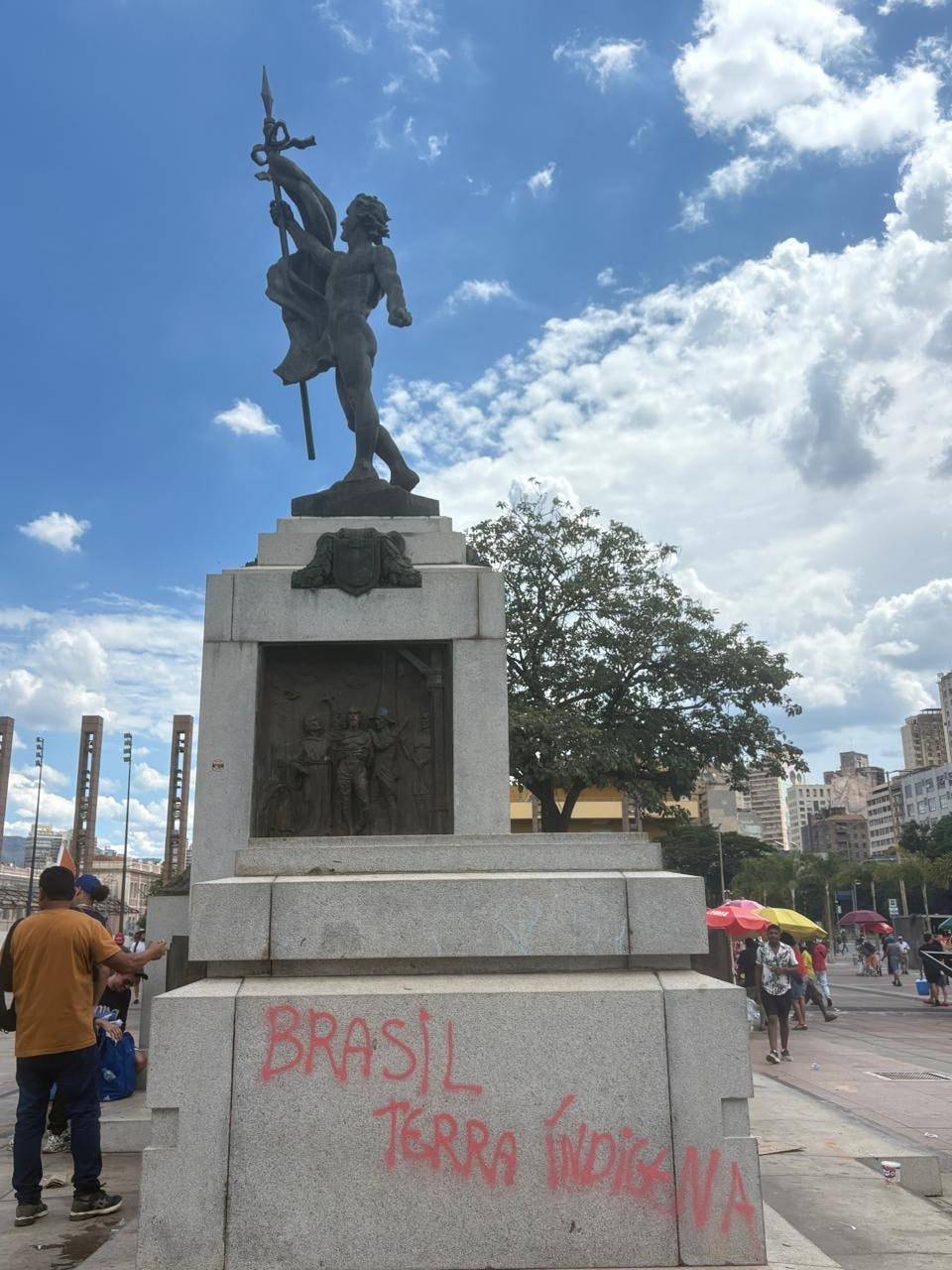
December 2025: Graffiti in Belo Horizonte in a rally against a six-day work week. It reads “Brazil: Indigenous land.”
Voting Cannot Defeat Dystopia
What happens in Gaza—or in any slum, ghetto, or forest—can happen to any population deemed undesirable, to any insurgency or rebel territory. The same military equipment Israel uses in Palestine is sold at international trade shows to police forces for controlling the outskirts of the Global South or arresting and deporting immigrants in the United States. The tech companies controlling the social media platforms, banking transactions, and messaging apps that billions of people use every day are the same ones developing the software and artificial intelligence that control increasingly autonomous lethal weaponry. They harvest our data just as they harvest the data of Palestinian, Lebanese, and Iranian civilian targets. We need ways of communicating and sharing data and resources that do not fuel a war machine that will turn against us if ever we rise up, or—if we never do—whenever our leaders see fit.
Floods, fires, droughts, heatwaves, misogyny, racism, epidemics, forced migration, and police forces that are increasingly brutal and heavily equipped. Political leaders and tech billionaires speak openly about waging genocidal wars to protect their interests. Those perpetrating the most documented genocide of all time in Gaza have faced no consequences or obstacles. The proponents of fascism exploit these crises to re-emerge unabashedly across the globe. Today, crisis is not a passing moment, but a permanent condition that will continue to deepen until the day the system collapses.
In this context, all discontent that fails to become revolutionary serves as fuel for reactionary movements and parties. We need ways of being and acting in the world that do not rely on the benevolence of a ruler who leaves office in four years, or on institutions so powerful and centralized that we cannot exert leverage upon them. We need ways to act outside and beyond the electoral cycle—rather than delegating our power to representatives, we need to take action and organize ourselves to defend the world we wish to inhabit.
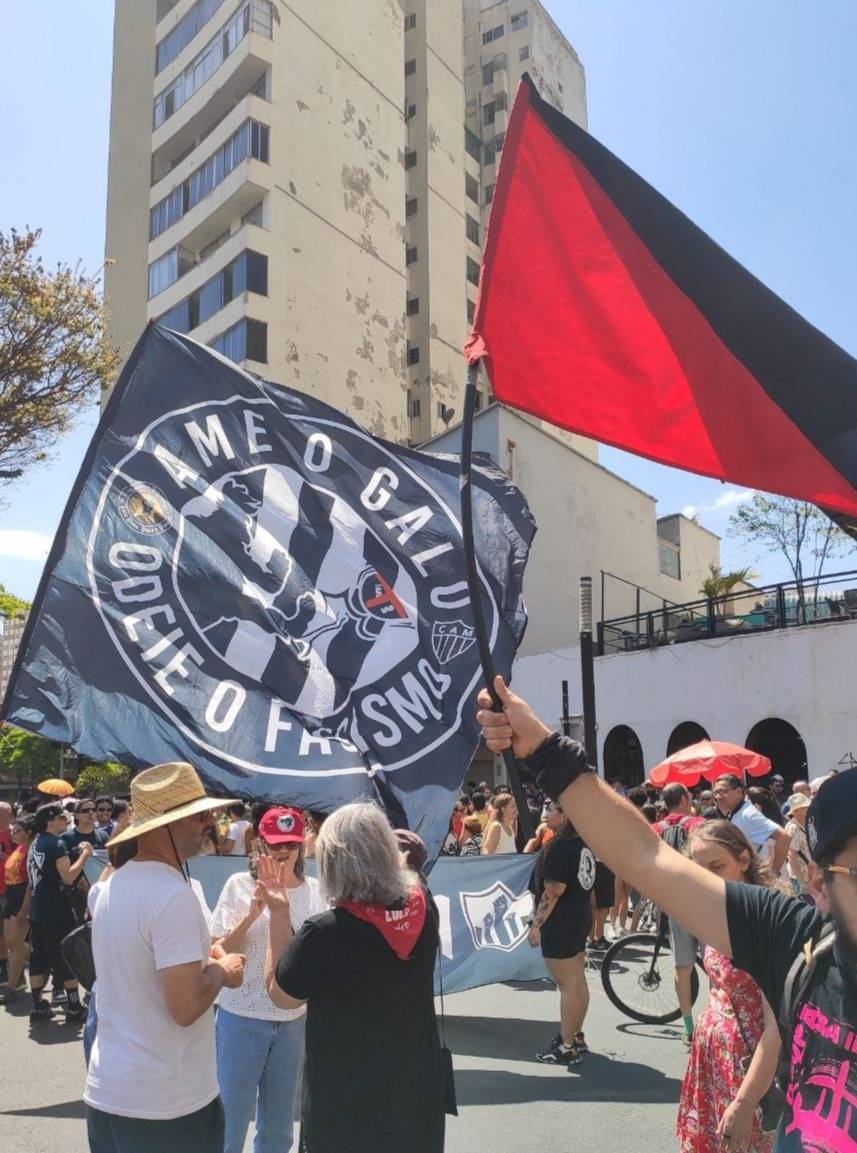
Anarchist and anti-fascist Atlético fans marching against the six-day work week.
By seeking to reform the institutions of state democracy, we only help to perpetuate a system of domination that imprisons and kills Black and Indigenous populations, that drives femicide as well as the destruction of biomes, of the essential foundations of life on Earth. Unless we organize society in a way that prevents tyrants from holding power, nothing we achieve will ever be secure.
Just as Bolsonaro shifted the entire political spectrum to the right—reducing the Left to merely seeking to conserve social gains and basic rights—new far-right candidates are normalizing even more authoritarian proposals. Even without a real chance of victory, figures like Renan Santos (of the Missão Party and the MBL) attempt to break away from Bolsonarism by making even more extremist and sensationalist statements. Their goal is to normalize fascist discourse for future generations so that, during times of heightened social conflict, their “easy solutions” appear more appealing to groups seeking to use violence against the oppressed to safeguard their own privileges.
The recent Banco Master scandal—the largest case of tax fraud ever recorded in Brazil—involved the misappropriation of 57 Billions Reais (11 billion dollars) from pension funds, companies, and private citizens. The fortune of its owner, Daniel Vorcaro, helped finance a propaganda film supporting Jair Bolsonaro—in English and featuring Hollywood actors—which served as a slush fund to bankroll the lives of his relatives and allies in the United States. The idea was to persuade the Trump administration to intervene in Brazilian politics and the economy. At the same time, Vorcaro uses his money and influence to buy off members of the judiciary and parliament, bankroll emerging far-right leaders, and facilitate illegal mining ventures in Minas Gerais. These operations pose environmental and social risks—much like the ventures that led to the tailings dam collapses in the towns of Brumadinho and Mariana, which killed people and animals and destroyed forests and entire rivers.
This single case illustrates how the elites are united and organized to defend their interests, promoting an agenda that links corruption, fascism, and environmental destruction in a war against the people for control over our lives and territories.
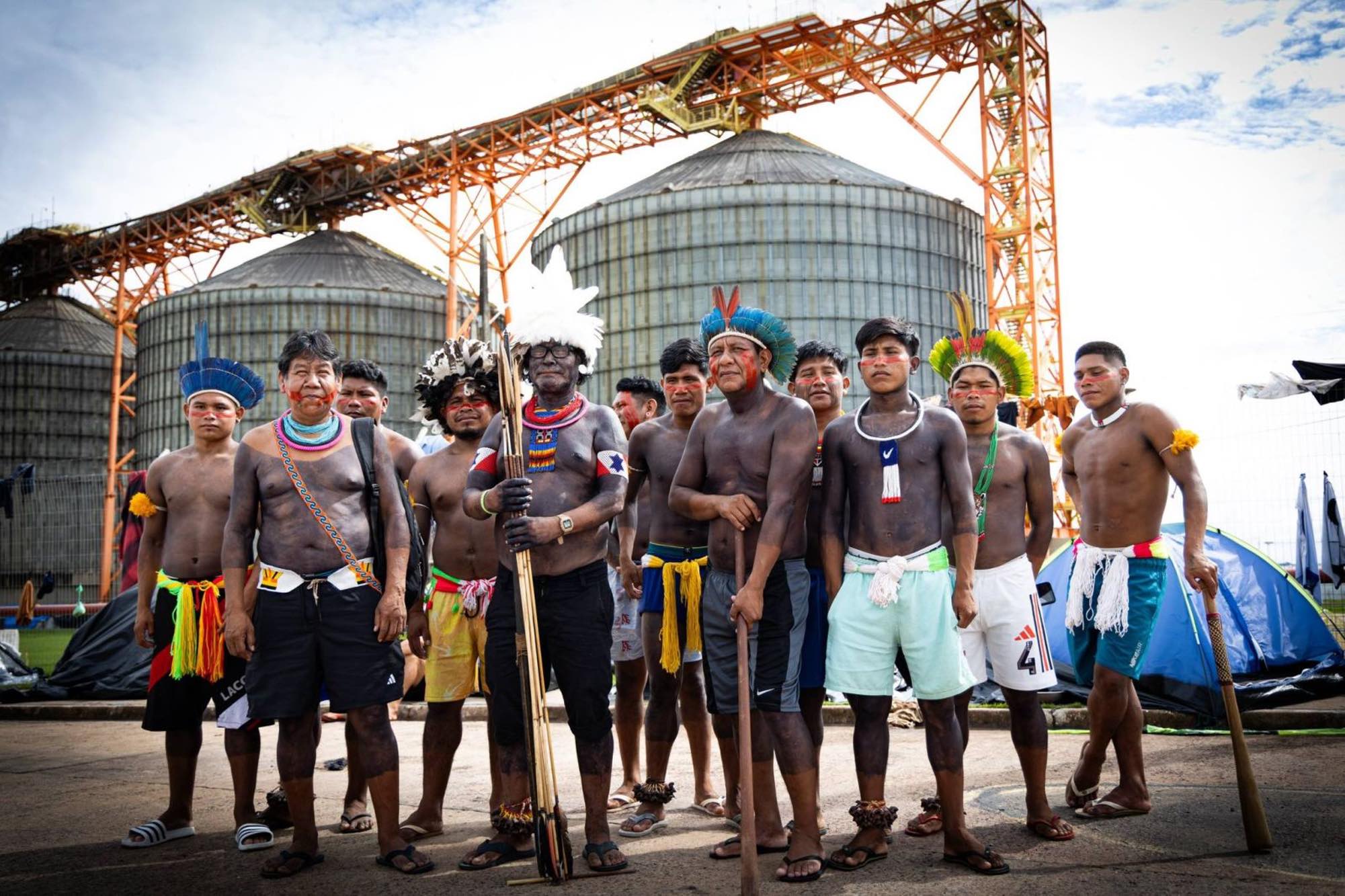
The only way out of this scenario is to organize and forge alliances to defend ourselves and the planet against the tyrants and the genocidal forces that serve them. We must take direct action, just as the peoples of the Lower, Middle, and Upper Tapajós—alongside the Tupinambá, fisherfolk, and quilombolas—did when they occupied the multinational Cargill’s port terminal for over a month, halting the company’s distribution and logistics. Movements from cities and other territories joined in, raising awareness, showing solidarity in person, and escalating the struggle by occupying company offices and organizing protests in various cities.
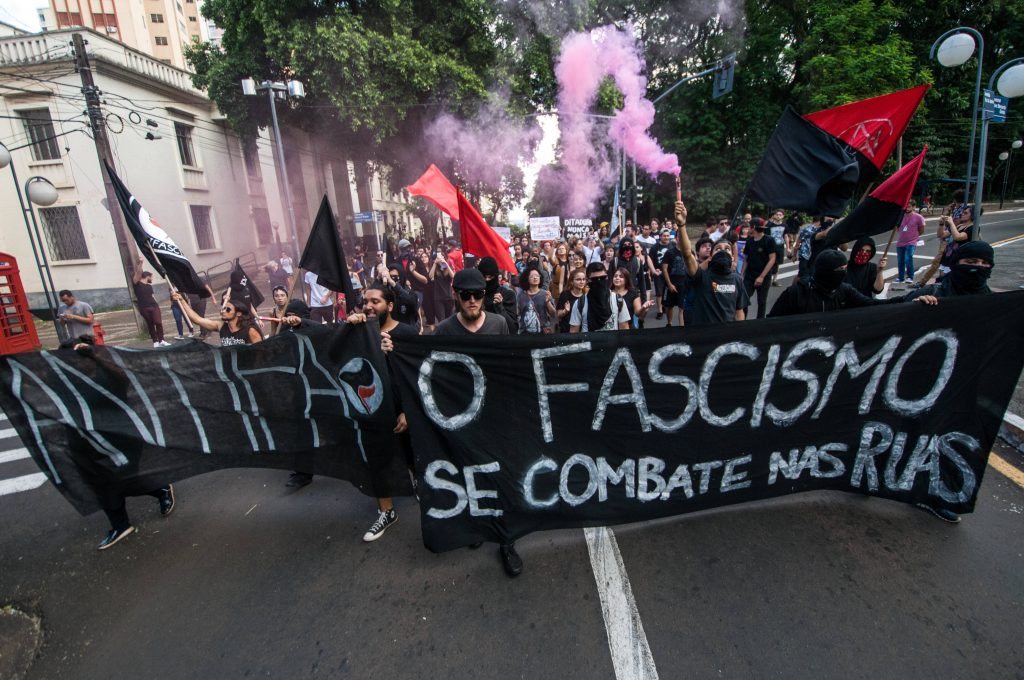
As anarchists have always said, “Fascism must be fought in the streets.” Londrina, 2023.
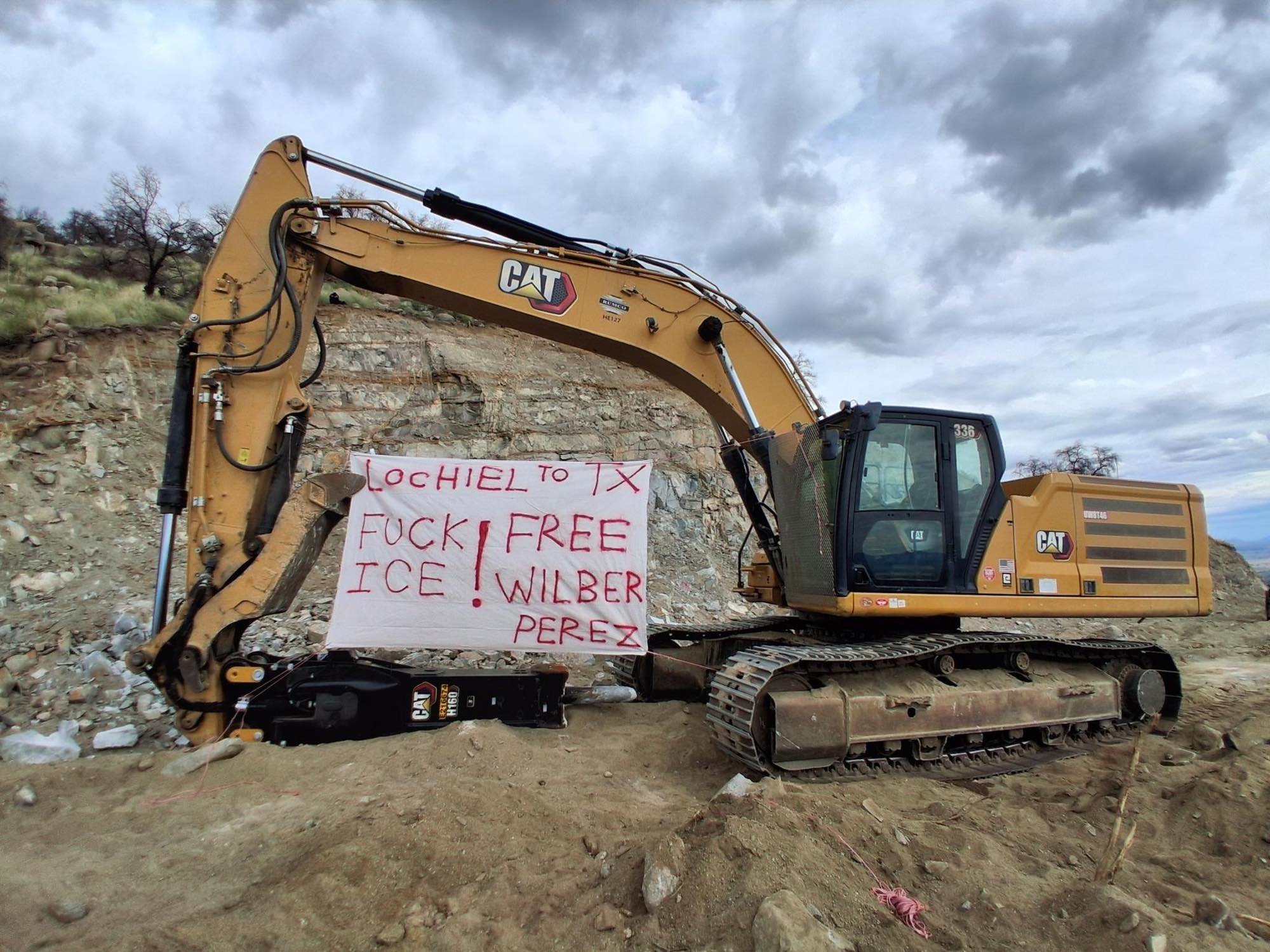
Autonomous action—unconstrained by the pacifying influence that characterizes movements under the tutelage of the Workers’ Party—is the only way forward. At no point in history has fascism been defeated solely through electoral victories. We need to draw inspiration from and publicize urban and rural occupations, the self-demarcation of Indigenous lands, app-based delivery workers’ strikes, and mutual aid networks in the outskirts. We need to build collectives and social movements that are organized and self-determined from the grassroots up—like the women in Argentina and Mexico fighting for abortion rights and against femicide, or those fighting for life and freedom in Iran. We must learn from the youth in Nepal and Indonesia challenging their governments and police; from immigrants and citizens organizing resistance against ICE—the immigration enforcement agency acting as Trump’s militia in the United States; and from the territories linked to the Teia dos Povos (Web of Peoples), which fosters alliances among quilombos, Indigenous lands, and urban and rural occupations in Brazil, grounded in an anti-colonial and anti-capitalist perspective.
The struggle is for life, freedom, and self-determination. No matter who wins the elections, one thing will not change: the worst-case scenario is already playing out, and neither elected leaders nor corporations will pull us out of the apocalypse they themselves created. As the saying goes in land defense movements: “If Bolsonaro wins, they kill us; if Lula wins, they let us die.”
Whether we vote or not, we must become ungovernable. We must act as if the life of the planet depends on it—because it truly does.
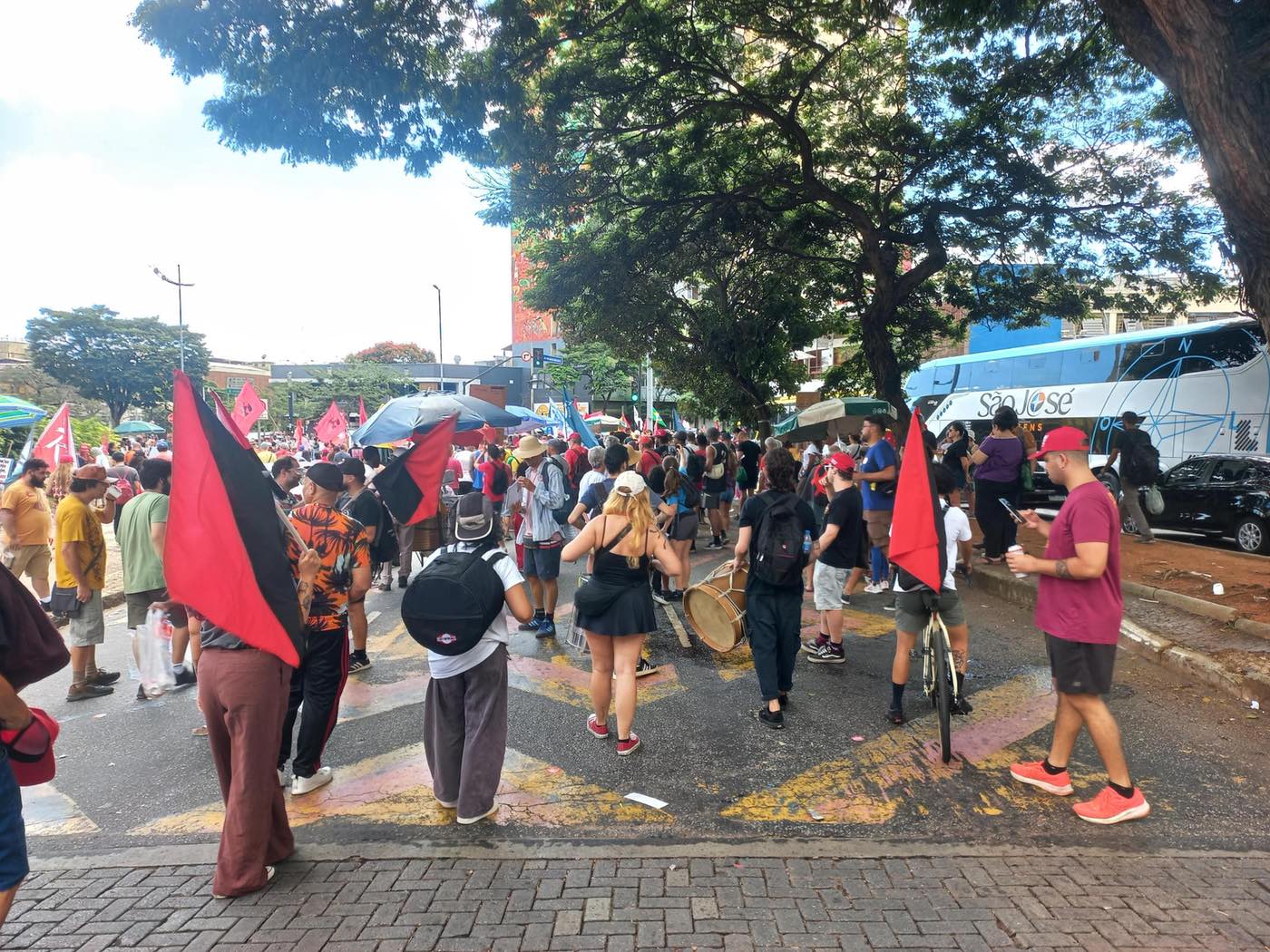
Anarchists in Belo Horizonte march against the six-day work week on May Day.